
Integrate Splunk Alerts with TaskCall
Splunk provides a powerful platform for searching, monitoring and analyzing machine generated data. It allows organizations prevent major issues and stay resilient when problems manifest. It can be configured to identify errors periodically or in real time through logs or user device activity. TaskCall integrates with Splunk to bring the alerts to the forefront. As alerts are piped by Splunk, TaskCall’s on-call management directs them to the correct on-call responder and our incident response system orchestrates the fastest possible resolution.
Pointers
- The integration is between a TaskCall service and Splunk.
- This integration only allows alerts to be received in TaskCall from Splunk.
In TaskCall
- Go to Configurations > Integrations and click New Integration.
- Select the Splunk integration.
- Give the integration a name and configure how incidents will be created. Only the Default Service field is required. The rest are optional.
- Incidents (Optional)
- TaskCall automatically maps incoming payloads with internal attributes to create incidents. However, this can be customized in the Incidents tab. Constant values can be included alongside placeholders to dictate which attributes should map to the Incident Title, Description, Tags, Snapshots and Vendor URL. To insert a placeholder use double curly braces.
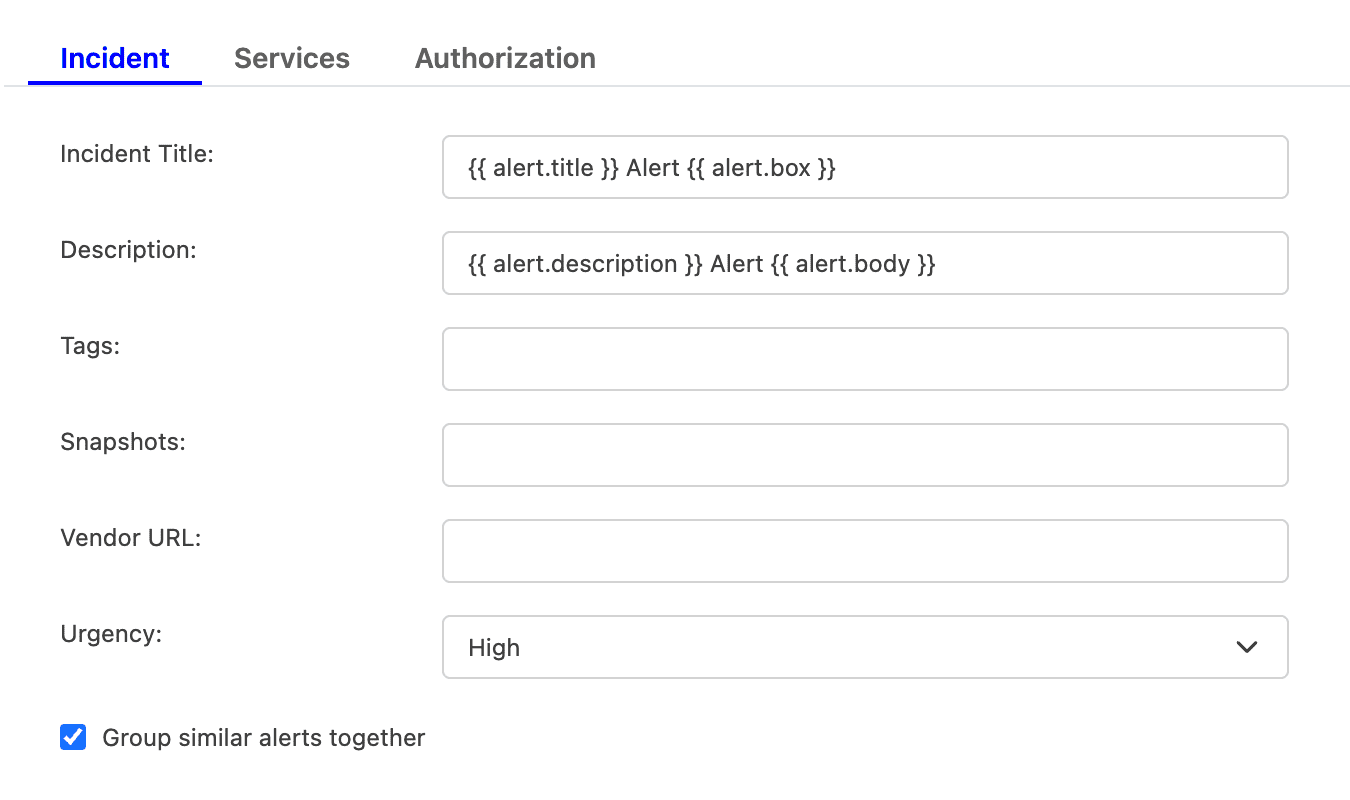
For example, if you enter {{ alert.title }} in the Incident Title field, TaskCall will look for an attribute called "title" nested inside another attribute called "alert" in the incoming payload. If the nested attribute exists, its corresponding value will be pulled from the payload and inserted. If the nested attribute does not resolve successfully, TaskCall will fall back to the default mapping.
If you are unsure, please leave the fields empty. TaskCall will use the default mapping to create the incident for you. - Select the Urgency level the incident should be created at.
- Select the option to Group similar alerts together if you would like follow up triggers from the same alert source to be grouped into the same incident. If you leave this option unchecked, then a new incident will be created for every trigger. (This behavior is specific to new triggers; not updates to an alert.)
- Click Next to move on to the Services tab.
- TaskCall automatically maps incoming payloads with internal attributes to create incidents. However, this can be customized in the Incidents tab. Constant values can be included alongside placeholders to dictate which attributes should map to the Incident Title, Description, Tags, Snapshots and Vendor URL. To insert a placeholder use double curly braces.
- Services (Required)
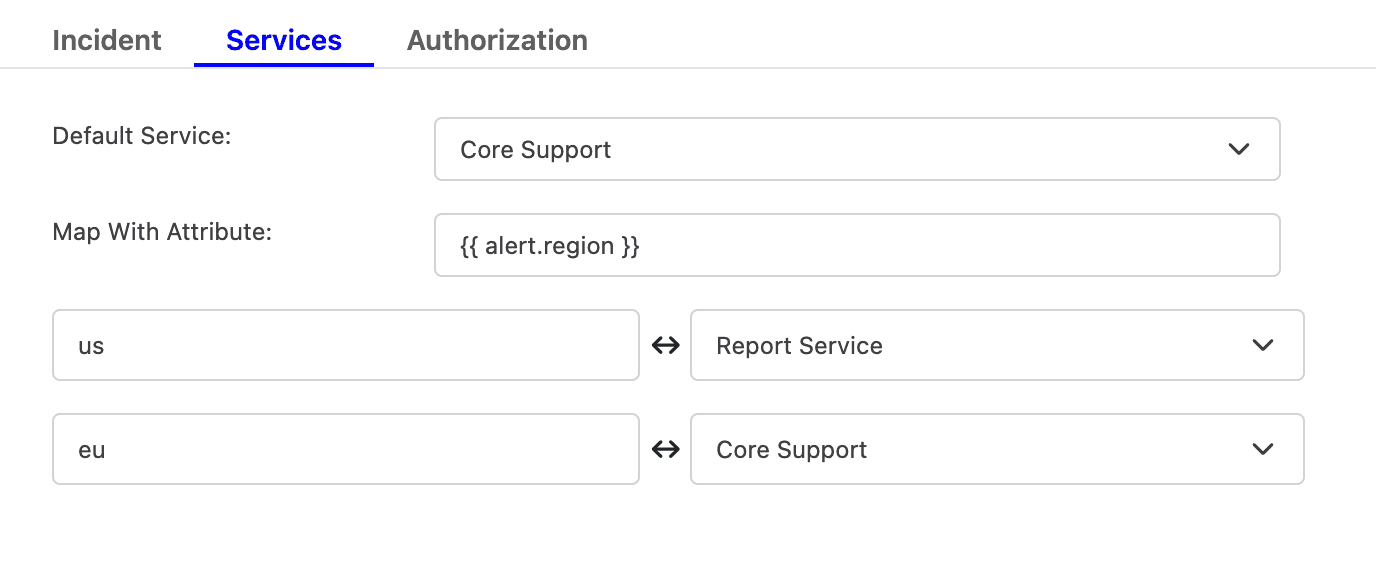
- Select the Default Service incidents should be sent to. To route incidents to different services instead, set Map With Attribute to the attribute to route by using a placeholder. Then, map each value it can take to the service that should receive it.
For example, to route by a region attribute sent in the payload, set Map With Attribute to {{ region }}, then map US to one service and EU to another, and so on.
- Click Next to move on to the Authorization tab.
- Select the Default Service incidents should be sent to. To route incidents to different services instead, set Map With Attribute to the attribute to route by using a placeholder. Then, map each value it can take to the service that should receive it.
- Authorization (Optional)
- The Authorization tab allows a Bearer Token and an IP Allowlist be added if you would like to restrict who is able to send alerts to this integration. If you are unsure, this can be skipped.
- Once done, click Save.
- Copy the Integration Url that is issued for the integration. This will be used to set up the notification in Splunk.
In Splunk
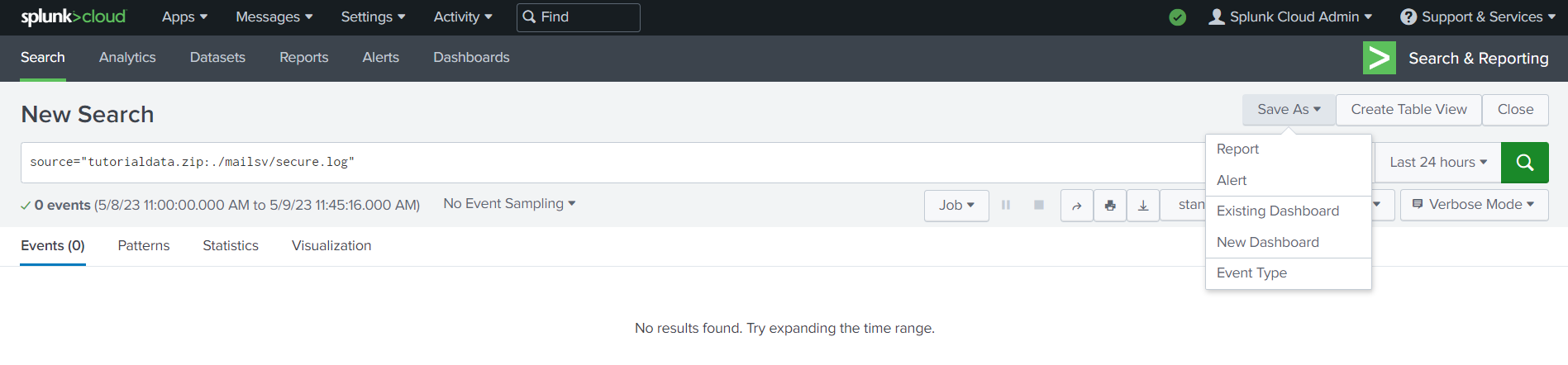
- Alerts in Splunk are configured from saved searches. Render the search you want to set up the alert from. Click on the Save As dropdown on the top right corner of the search results page and then click Alert.
- Configure the alert. Give it a name, describe it and set the schedule when the alert should run.
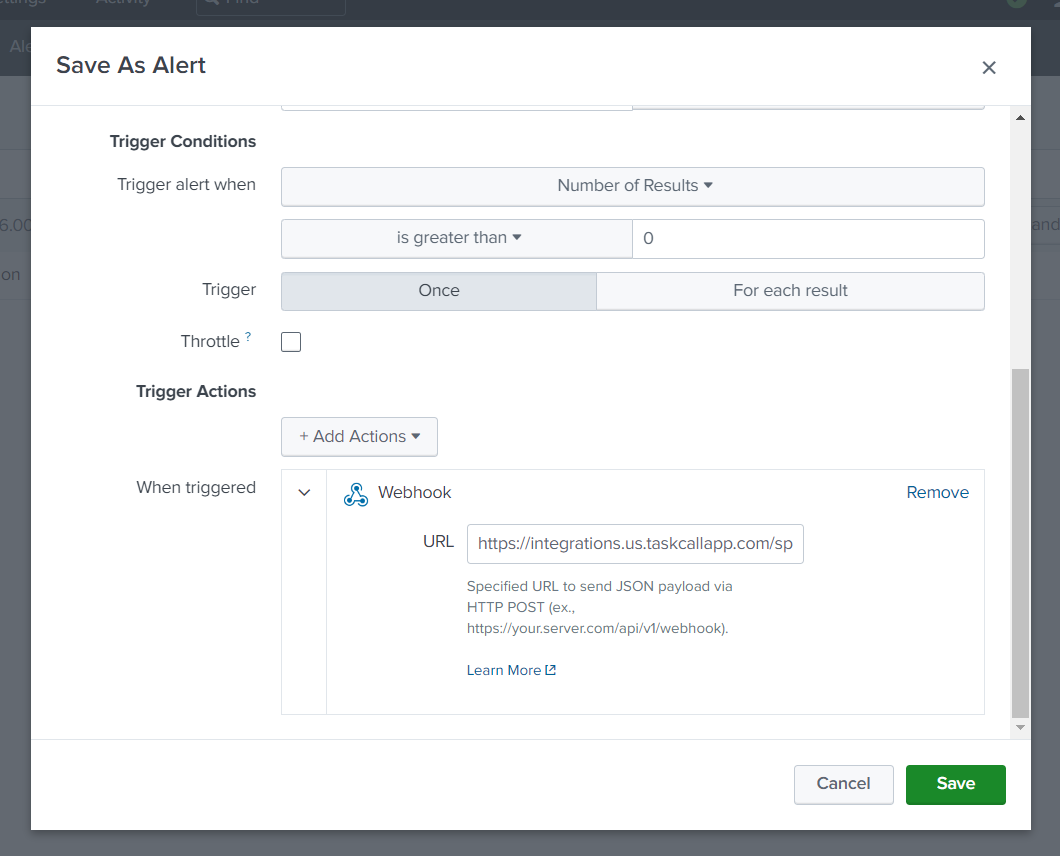
- In the Trigger Actions section at the bottom, click Add Actions and select Webhook. Paste the integration URL that you copied over from TaskCall here.
- Click Save when you are done.
You can repeat the same steps for other alerts to pipe them to TaskCall.