Incident AIOps
An Incident AI is a special type of artificial intelligence that is designed to help organizations manage and respond to unresolved incidents effectively. It uses machine learning algorithms and natural language processing to analyze incident data, identify patterns, and provide insights that can help responders understand the root cause of the incident and how to resolve it quickly.
Whenever an incident is triggered in TaskCall, our Incident AI kicks in to analyze the details of the incident and provide responders with relevant information and recommendations. This includes the likely cause of the incident and the best course of action to take to resolve it.
Incident AI is only available in the Digital Operations plan.
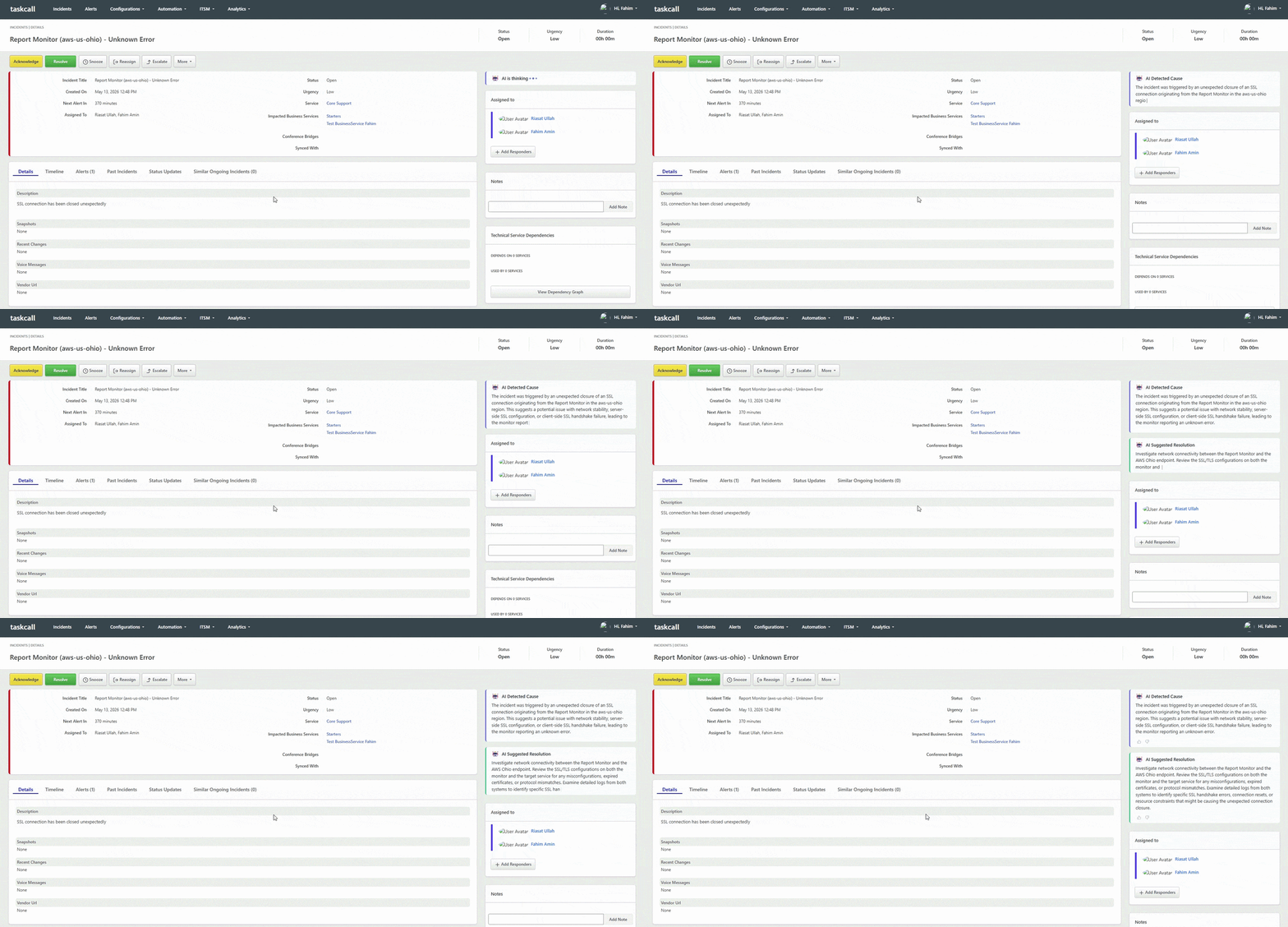
AI in Incident Cause
The lifecycle of an incident in TaskCall starts when an alert is triggered. This can happen due to various reasons such as a system failure, a security breach, or any other event that requires immediate attention. Once an alert is triggered, TaskCall creates an incident and assigns it to the appropriate responders based on the escalation policy. The Incident AI then analyzes the incident data to determine the likely cause of the incident if the incident's title does not contain enough information to figure out the root cause of the incident. This analysis can include looking at the incident data, payload and other relevant information to identify patterns and correlations that may indicate the root cause of the incident.
It also has a feedback loop that allows responders to provide feedback on the accuracy of the AI's analysis. This feedback is used to improve the AI's performance over time, making it more effective at identifying the root cause of incidents in the future.
AI in Incident Resolution
An incident can have multiple ways to be resolved, and the Incident AI can help responders determine the best course of action to take based on the incident data and the likely cause of the incident. The AI provides the resolution steps based on the resolution steps of similar incidents in the past, and it can also provide recommendations for additional actions from the knowledge base that may be necessary to fully resolve the incident.
It also has a feedback loop that allows responders to provide feedback on the effectiveness of the resolution steps provided by the AI. This feedback is used to improve the AI's performance over time, making it more effective at providing accurate and relevant resolution steps for incidents in the future.