xMatters is a capable incident-response platform with strong AI and workflow automation. TaskCall Digital Operations is built for teams that want the complete digital operations lifecycle in one focused plan: AI-powered triage, intelligent noise reduction, automated diagnosis, visual workflow automation, stakeholder communication, customer support visibility, and AI-generated postmortems - at better pricing, with no tier upgrades required to access the full feature set.
xMatters has built a strong incident-response platform with recognized AI capabilities, Flow Designer for visual workflow automation, and a broad integration ecosystem. For teams that are already deep in the xMatters ecosystem, it provides a capable operational layer. But for teams evaluating the full picture - including what is available at which pricing tier and what the total cost of the complete capability set looks like - xMatters' tiered packaging introduces friction that compounds as teams grow. Status pages and post-incident reporting, two capabilities that every operations team eventually relies on, require Advanced plan access rather than being included in the base offering.
TaskCall Digital Operations is built around a different model: every capability an operations team needs to detect, triage, respond to, communicate about, and learn from incidents is available in one plan. AIOps, intelligent noise reduction powered by machine learning, AI-assisted cause and resolution analysis, visual workflow automation, stakeholder status pages, customer support visibility, and AI-generated postmortems are all part of the Digital Operations plan - not reserved for higher-tier customers or unlocked through separate upgrade decisions. Teams get the complete operational toolkit from day one, not a progressively expanding set of locked capabilities.
TaskCall's AIOps layer activates automatically at incident creation. When a new incident fires, the AI engine analyzes the triggering alert, cross-references it against historical incident patterns and similar past events, identifies likely causes ranked by confidence, and surfaces recommended resolution steps - before the on-call engineer has run a single query or opened a dashboard. Intelligent noise reduction runs continuously across incoming alert traffic, using machine learning to group related alerts from the same underlying cause into a single unified incident and suppress recurring signals that match known flapping patterns. The result is a cleaner, more actionable alert queue with fewer redundant interruptions per real incident.
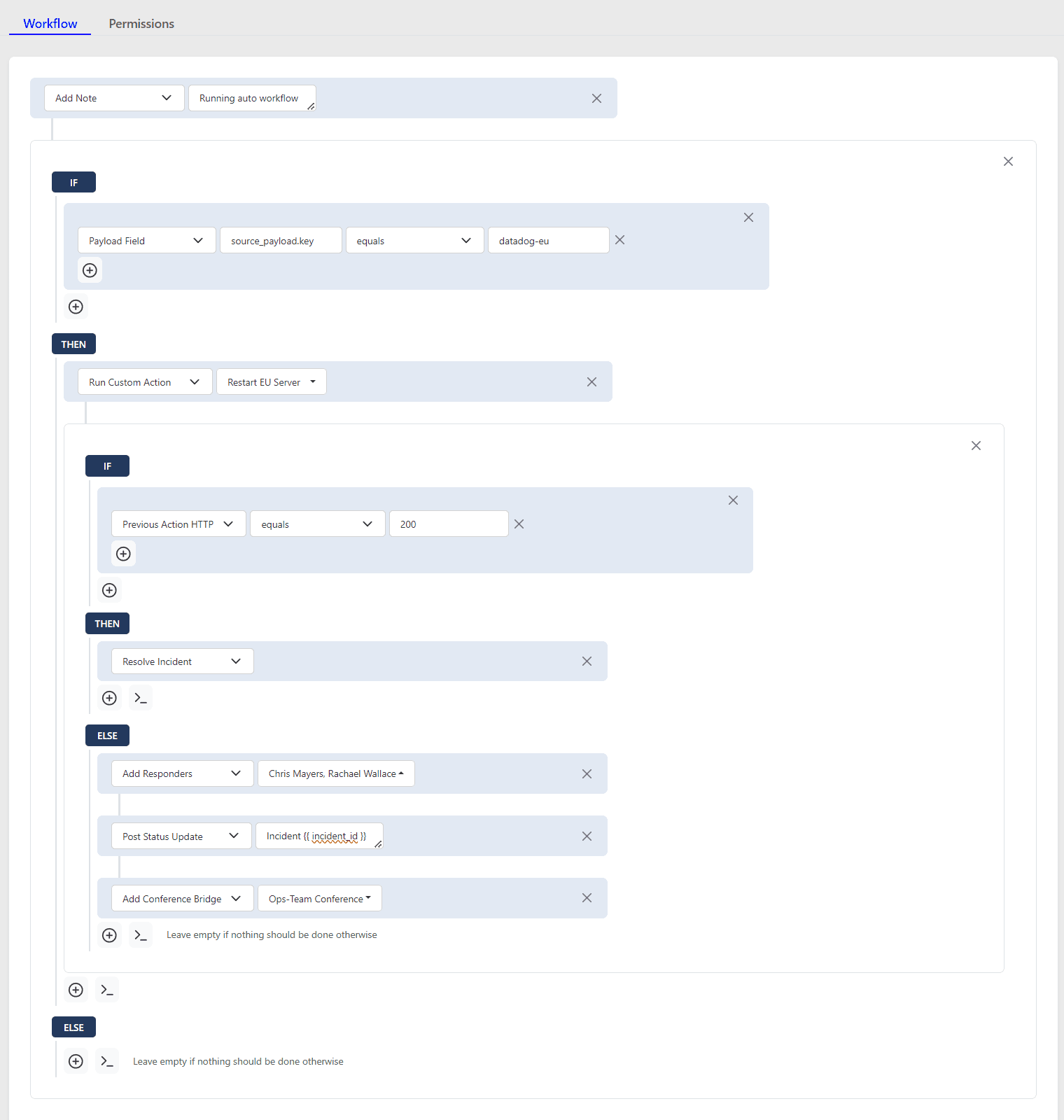
Workflow automation in TaskCall is built around outcome-based logic, not just task sequencing. TaskCall Incident Workflows support conditional logic, action statements, nested conditions, payload-field conditions, and prior-action status checks - so workflows respond to what actually happened during incident triage, not just what was pre-configured. Automated diagnosis runs as soon as an incident is created, logging diagnostic results into the incident timeline before responders begin investigating. Engineers do not arrive at an incident cold - they arrive with AI-generated context, diagnostic output, and recommended next steps already prepared. Combined with TaskCall's AI-generated postmortems, the complete incident lifecycle from detection to structured learning is handled within one focused operating model.
TaskCall costs 52% less than xMatters across all comparable subscription tiers - and delivers more: AIOps, intelligent noise reduction, visual workflow automation, AI postmortems, status pages, and customer support visibility are all included in the Digital Operations plan at every level. Lower price, broader capability set, no tier upgrades required to access any part of the feature set.
Both TaskCall and xMatters include AIOps capabilities. The difference is how each platform integrates AI into the full incident lifecycle. TaskCall's AIOps - intelligent grouping, likely cause analysis, resolution recommendations, past similarity matching, and AI postmortem generation - is native to the Digital Operations plan and activates automatically at incident creation. No separate activation or additional configuration is required for AI to be part of every incident response by default.
TaskCall's intelligent noise reduction engine uses machine learning to continuously group related alerts from the same underlying cause, suppress recurring signals that match known flapping patterns, and deprioritize low-severity notifications based on historical resolution data. The result is a cleaner on-call queue with fewer redundant interruptions per real incident - available in the Digital Operations plan with no extra activation required.
TaskCall Incident Workflows support a visual workflow canvas with conditional logic, outcome-dependent execution, nested conditions, and prior-action status checks. Automated diagnosis runs as soon as an incident is created, logging results into the incident timeline before any responder begins investigating. Workflows react to what actually happened during triage - not just what was pre-configured at setup time.
TaskCall automatically generates structured postmortem drafts when incidents are resolved, pulling in the full incident timeline - alert history, acknowledgement records, escalation events, responder actions, and resolution notes - into a structured draft that teams review and annotate rather than build from scratch. AI-generated postmortems are included in the Digital Operations plan. No Advanced plan upgrade is required to access them.
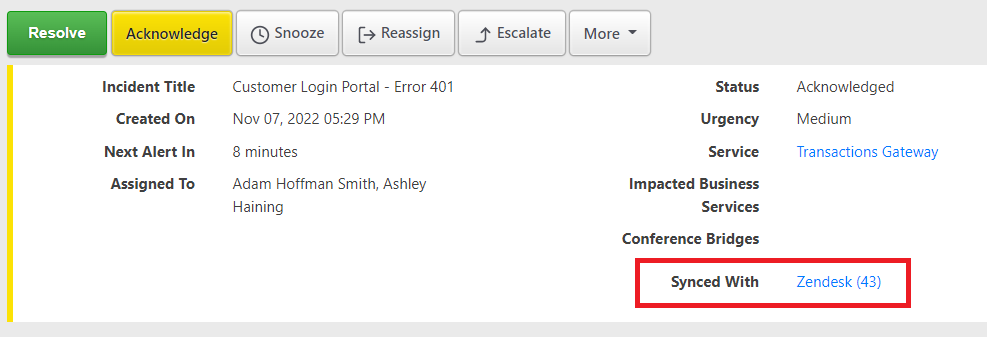
TaskCall gives customer support teams direct backend incident visibility - they can see active incident impact, link support tickets to incidents, subscribe to resolution updates, and mobilize the right technical team from inside their existing ticketing workflow without interrupting responders or chasing engineers for status. This customer-operations bridge is part of the Digital Operations plan, not a separate integration layer.
xMatters has strong AI capabilities. Its Incident Agent can suggest resolvers, summarize the incident, recommend next steps, and draft stakeholder updates. It also provides AI suggestions for potential root cause, impacted applications, change correlation, accelerated triage, and automated remediation. The question for teams evaluating these two platforms is not whether xMatters has AI - it does. The question is how each platform weaves AI into the full incident lifecycle and what that integration looks like in practice when an on-call engineer is being paged at 2 AM.
TaskCall's AIOps activates automatically from the moment an incident is created. The AI engine analyzes the triggering alert, cross-references it against historical incident patterns and similar past events, identifies likely causes ranked by confidence level, and surfaces recommended resolution steps - all before the responder has opened a single tool. Intelligent noise reduction runs in the background across all incoming alert traffic, using machine learning to group related signals from the same underlying cause into a single unified incident and suppress recurring alerts that match known flapping patterns. For engineering teams managing complex distributed systems where a single degraded service can trigger cascading alerts across dozens of dependent monitors, machine learning-powered grouping is the difference between one actionable notification and a flood of redundant pages. AI-generated postmortems close the loop: when an incident is resolved, TaskCall compiles the full timeline into a structured draft that teams review and annotate rather than write from scratch. The entire AI layer - from initial triage to post-incident learning - is part of the Digital Operations plan with no separate activation required.
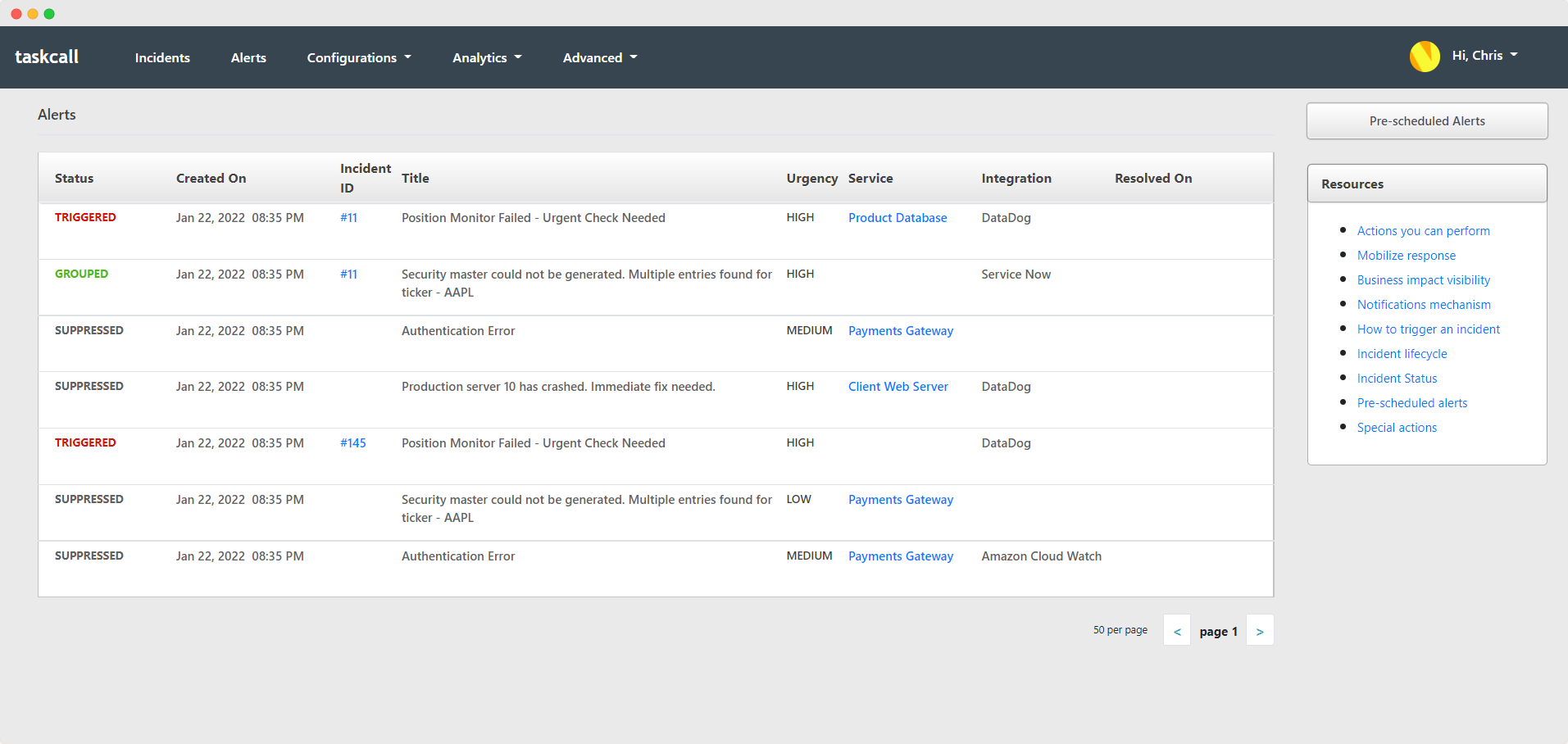
Both TaskCall and xMatters support visual workflow automation - TaskCall through Incident Workflows and xMatters through Flow Designer. xMatters' Flow Designer is a capable visual builder for connecting DevOps and IT applications, creating tickets, posting updates, alerting teams, and coordinating incident response across tools and time zones. For teams that need to build integration workflows between their existing tool stack, Flow Designer is a strong capability. TaskCall's workflow approach is optimized around a different goal: outcome-based response logic that reacts to what actually happens during an active incident, not just what was configured at setup time.
TaskCall Incident Workflows support conditional logic, action statements, nested conditions, payload-field conditions, and prior-action status checks. A workflow can branch based on whether an automated diagnosis step succeeded or failed, whether a specific integration returned a threshold breach, or whether a previous escalation action reached acknowledgement within the configured timeout. Automated diagnosis runs as soon as an incident is created - not when a responder triggers it manually - logging results into the incident timeline before the on-call engineer begins investigating. When a responder opens the incident, the diagnostic output is already there: what ran, what it found, and what the recommended next step is. Workflow automation in TaskCall is not just about connecting tools. It is about preparing the investigation automatically so responders arrive at every incident with context, diagnostics, and a defined response path already in place.
The strongest argument for TaskCall over xMatters is not any single feature - it is the pricing model that surrounds the full feature set. xMatters has multiple tiers, and not all capabilities are available at every level. For teams that need the complete operational toolkit - including status pages for external stakeholder communication and structured post-incident reports for reliability improvement - the cost picture expands as those requirements are identified. TaskCall takes a different approach. The Digital Operations plan includes AIOps, intelligent noise reduction, workflow automation, visual workflow canvas, AI-generated postmortems, status pages, customer support visibility, and analytics - at one price, with no tier upgrade required to access any part of the feature set.
For operations teams, the practical impact of this difference becomes visible over time. A team that starts with incident response and on-call management eventually needs noise reduction to address alert fatigue, AI-assisted triage to speed diagnosis, postmortems to drive reliability improvements, status pages to manage stakeholder communication, and customer-support visibility to connect the engineering response to the business impact. In xMatters, each of those needs triggers a capability evaluation and potentially a plan upgrade decision. In TaskCall, all of those capabilities are live from the moment the Digital Operations plan is activated. Teams that want a complete incident operations workflow without managing a tiered procurement process get a more direct path to operational capability with TaskCall.
A side-by-side look at what each platform offers across core incident management capabilities.
| TaskCall | xMatters | |
|---|---|---|
| 52% Better Pricing on Every Plan TaskCall costs 52% less than xMatters across all comparable subscription tiers - with AIOps, intelligent noise reduction, workflow automation, AI postmortems, and status pages included at every level, not locked behind tier upgrades. | ||
| Workflow Automation Visual incident response workflows with conditional logic, automated actions, and outcome-dependent execution. | ||
| AIOps AI-powered alert grouping, likely cause analysis, resolution recommendations, and intelligent noise reduction. | ||
| Postmortem Structured post-incident documentation with AI-generated drafts, timeline data, and follow-up action tracking. | ||
| Intelligent Noise Reduction Machine learning-powered alert correlation, deduplication, and flapping signal suppression. | ||
| Visual Workflow Canvas Drag-and-drop workflow builder for creating conditional incident response logic and automation. | ||
| Business and Service Dependencies Automatic detection of downstream and upstream service impact when an incident occurs. | ||
| Nested IVR Multi-level interactive voice response for intelligent call routing to on-call engineers. | ||
| SMS Routing Alert delivery via SMS to on-call engineers as part of the escalation policy. | ||
| Unlimited SMS and Voice Calls Unlimited SMS and voice call notifications on all paid plans with no per-message or per-call charges. |
Get the complete digital operations platform.
AIOps, intelligent noise reduction, visual workflow automation, AI postmortems, status pages, and customer support visibility - all in one plan.
No tier upgrades. No surprises. Switch to TaskCall today.
Don't lose money from downtime.
We are here to help.
Start today. No credit cards needed.
81% of teams report response delays due to manual investigation.
Morning Consult | IBM
Global Security Operations Center Study Results
-- March 2023