AlertOps is a capable incident-orchestration platform with strong on-call scheduling, AI-powered alert intelligence, no-code workflow automation, and stakeholder communication. TaskCall Digital Operations is built for teams that want the complete digital operations lifecycle in one focused plan: intelligent noise reduction, automated diagnosis, AI-enabled resolution, status pages, business-impact visibility, customer support visibility, and AI-generated postmortems - at better pricing, with no tier upgrades required to access the full feature set.
AlertOps has built a strong incident-orchestration platform with flexible on-call scheduling, OpsIQ AI for noise filtering and root cause analysis, no-code workflow automation, and multi-channel stakeholder communication. For teams whose primary requirement is alert routing, escalation policy management, and on-call coordination, AlertOps is a capable platform. But for teams evaluating the full picture - including status pages for external stakeholder communication, business-impact visibility tied to technical incidents, and a dedicated customer support operations workflow - the scope of what AlertOps covers as a native operational capability versus what it handles through integrations or omits entirely becomes relevant.
TaskCall Digital Operations is built around a different model: every capability an operations team needs to detect, triage, respond to, communicate about, and learn from incidents is available in one plan. AIOps, intelligent noise reduction powered by machine learning, automated diagnosis, AI-enabled resolution, status pages, customer support visibility, and AI-generated postmortems are all part of the Digital Operations plan - not reserved for higher-tier customers or left to external tooling. Teams get the complete operational toolkit from day one, without evaluating which capabilities require additional configuration, separate tooling, or plan upgrades.
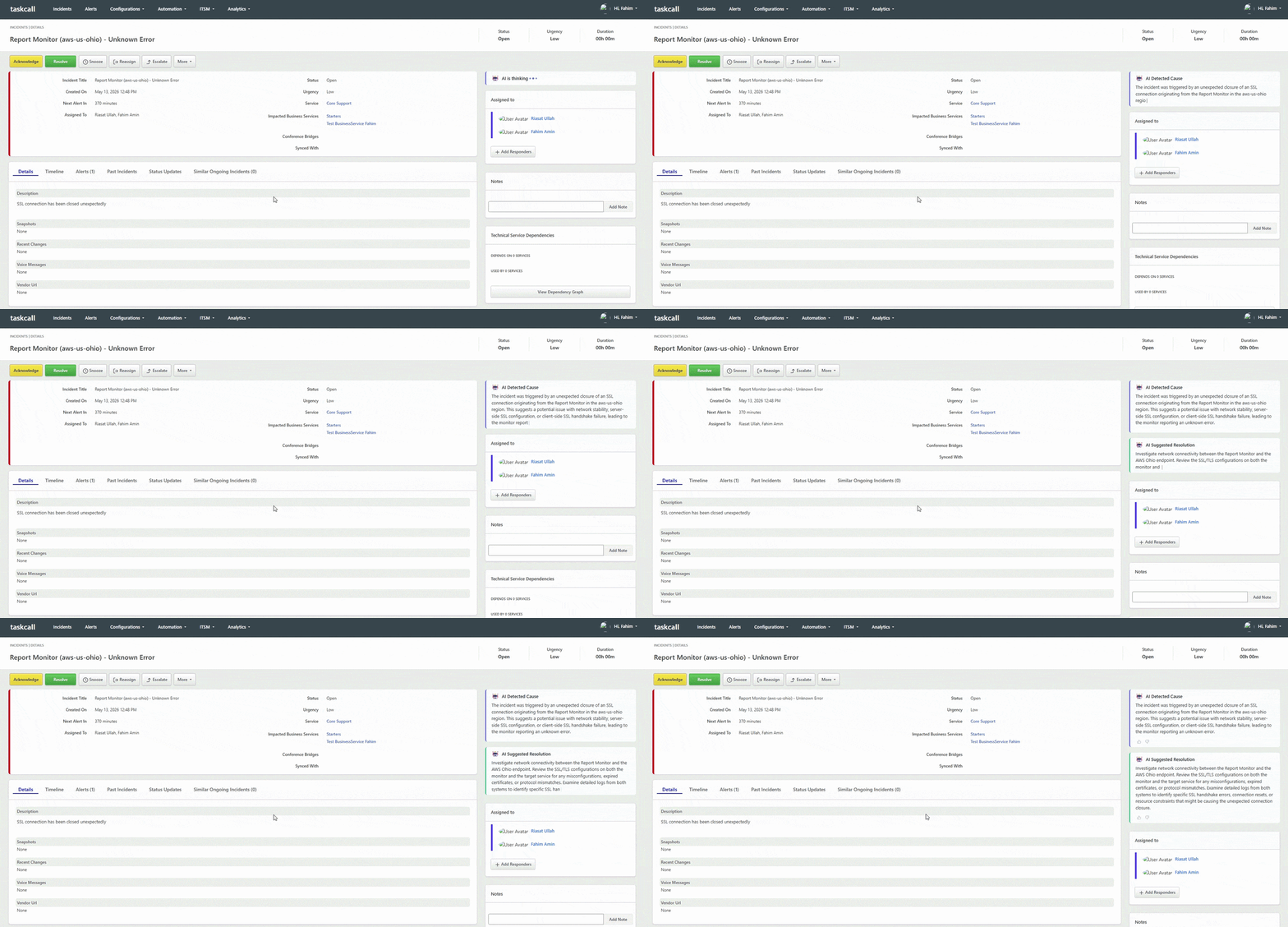
TaskCall's AIOps layer activates automatically at incident creation. When a new incident fires, the AI engine analyzes the triggering alert, cross-references it against historical incident patterns and similar past events, identifies likely causes ranked by confidence, and surfaces recommended resolution steps - before the on-call engineer has run a single query or opened a dashboard. Intelligent noise reduction runs continuously across incoming alert traffic, using machine learning to group related alerts from the same underlying cause into a single unified incident and suppress recurring signals that match known flapping patterns. The result is a cleaner, more actionable alert queue with fewer redundant interruptions per real incident.
Where TaskCall's approach is most distinct is in how it treats status communication and customer support operations as native parts of the incident workflow. Status pages in TaskCall are built into the Digital Operations plan - teams can publish internal and external status updates, sync incident state automatically, schedule maintenance windows, and manage subscriber notifications without external tooling. When an incident fires, support teams get direct backend incident visibility: they can see active incident impact, link support tickets to incidents, subscribe to resolution updates, and mobilize the right engineering team from inside their existing ticketing workflow without interrupting responders or chasing engineers for status.
TaskCall costs 15% less than AlertOps across all comparable subscription tiers - and delivers more: AIOps, intelligent noise reduction, automated diagnosis, dynamic drag-and-drop workflow automation, automated validation and resolution execution, AI postmortems, status pages, and customer support visibility are all included in the Digital Operations plan at every level. Lower price, broader capability set, no tier upgrades required to access any part of the feature set.
Both TaskCall and AlertOps include AI-powered incident intelligence. AlertOps offers OpsIQ for noise filtering, root cause analysis, and resolution suggestions. TaskCall's AIOps - intelligent grouping, likely cause analysis, resolution recommendations, past similarity matching, automated diagnosis, and AI postmortem generation - is native to the Digital Operations plan and activates automatically at incident creation. AI is part of every incident response by default, tied to the full Digital Operations workflow rather than scoped to alert triage alone.
TaskCall's intelligent noise reduction engine uses machine learning to continuously group related alerts from the same underlying cause, suppress recurring signals that match known flapping patterns, and deprioritize low-severity notifications based on historical resolution data. The result is a cleaner on-call queue with fewer redundant interruptions per real incident - available in the Digital Operations plan with no extra activation required.
TaskCall includes internal and external status pages as part of the Digital Operations plan - with branded design, automatic incident sync, maintenance scheduling, subscriber management, and internal stakeholder dashboards. AlertOps does not include a native status page, which means teams that need external stakeholder communication during incidents must rely on a separate tool. TaskCall gives teams a complete stakeholder communication layer without adding tooling.
TaskCall includes live call routing so incidents that require immediate voice escalation can reach the right on-call responder directly. Combined with on-call scheduling, flexible escalation policies, and automated incident workflows, live call routing ensures that critical incidents are not delayed by missed notifications or paging gaps - all within the Digital Operations plan.
TaskCall gives customer support teams direct backend incident visibility - they can see active incident impact, link support tickets to incidents, subscribe to resolution updates, and mobilize the right technical team from inside their existing ticketing workflow without interrupting responders. AlertOps supports stakeholder communication channels but does not offer a dedicated customer-support operations workflow with backend incident visibility as a native capability.
AlertOps has strong AI capabilities through OpsIQ. Its AI filters noise, detects root cause, summarizes alerts, and suggests resolution paths based on historical context and pattern recognition. For teams whose primary goal is faster alert triage and smarter escalation decisions, OpsIQ adds genuine value to the incident-orchestration workflow. The question for teams evaluating these two platforms is not whether AlertOps has AI - it does. The question is how each platform ties AI into the full operational lifecycle beyond alert handling and what that looks like for a responder managing a complex incident across distributed systems.
TaskCall's AIOps activates automatically from the moment an incident is created. The AI engine analyzes the triggering alert, cross-references it against historical incident patterns and similar past events, identifies likely causes ranked by confidence level, and surfaces recommended resolution steps - all before the responder has opened a single tool. Intelligent noise reduction runs in the background across all incoming alert traffic, using machine learning to group related signals from the same underlying cause into a single unified incident and suppress recurring alerts that match known flapping patterns. For engineering teams managing complex distributed systems where a single degraded service can trigger cascading alerts across dozens of dependent monitors, machine learning-powered grouping is the difference between one actionable notification and a flood of redundant pages. AI-generated postmortems close the loop: when an incident is resolved, TaskCall compiles the full timeline into a structured draft that teams review and annotate rather than write from scratch. The entire AI layer - from initial triage to post-incident learning - is part of the Digital Operations plan.
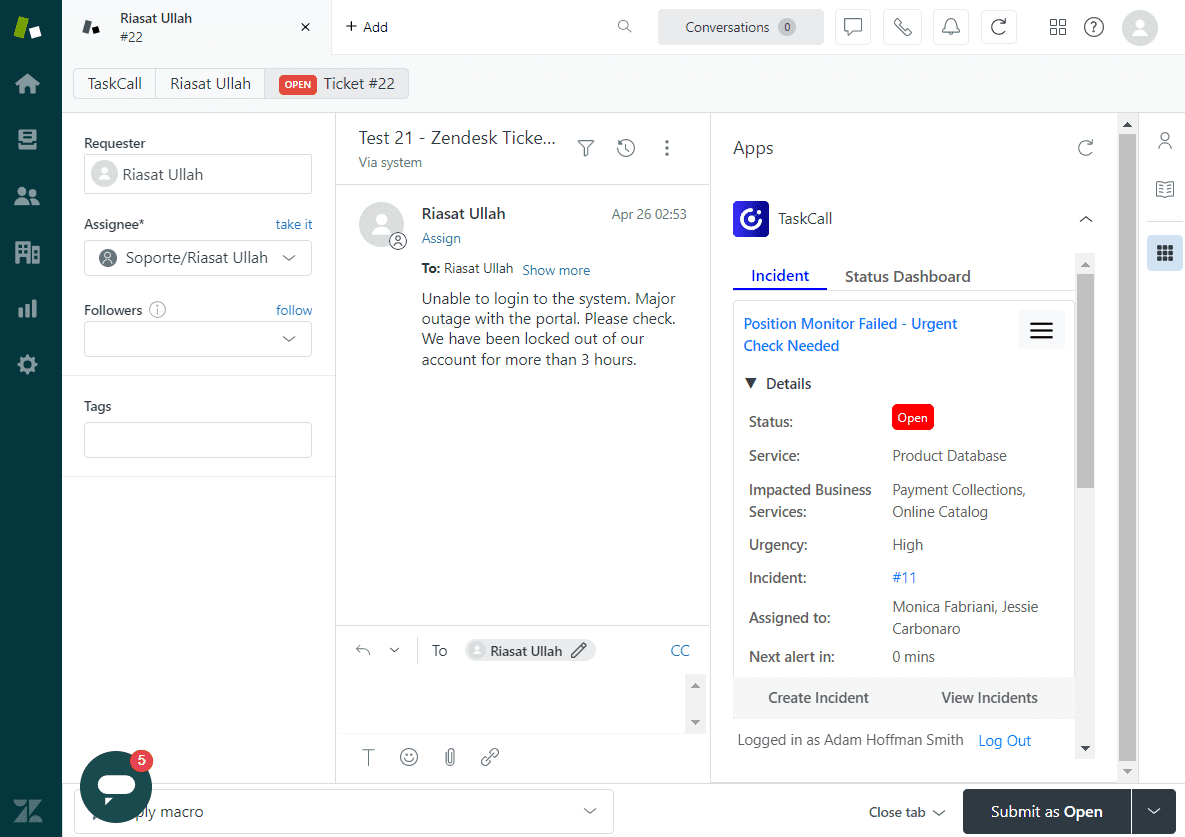
When an incident affects customers, two parallel workflows activate: the engineering team works to diagnose and resolve the incident, and the customer support team manages customer communication and incoming support volume. These two workflows are frequently disconnected - support teams chase engineers for status updates, engineers get interrupted mid-investigation, and customers receive delayed or incomplete information. AlertOps supports stakeholder communication through multiple channels and integrates with ITSM tools, but its public positioning centers on incident orchestration, on-call scheduling, and alert routing rather than a dedicated customer-support operational workflow with backend incident visibility. TaskCall approaches the same problem from a different starting point.
TaskCall's customer support operations capability is a dedicated operational workflow built into the Digital Operations plan. Support teams get direct backend incident visibility through a customer-operations view that shows active incident impact without requiring engineering team involvement. They can link support tickets to incidents, subscribe their team to resolution notifications, see which business services are affected and at what severity, and mobilize the right technical team directly from inside their existing ticketing tools - without interrupting responders or sending status-request messages into already-active incident channels. TaskCall's internal status pages tie directly to this workflow, automatically surfacing business-service impact from technical incidents and giving operations teams a complete picture of what is affected and who needs to know - without manual status updates across separate tools.
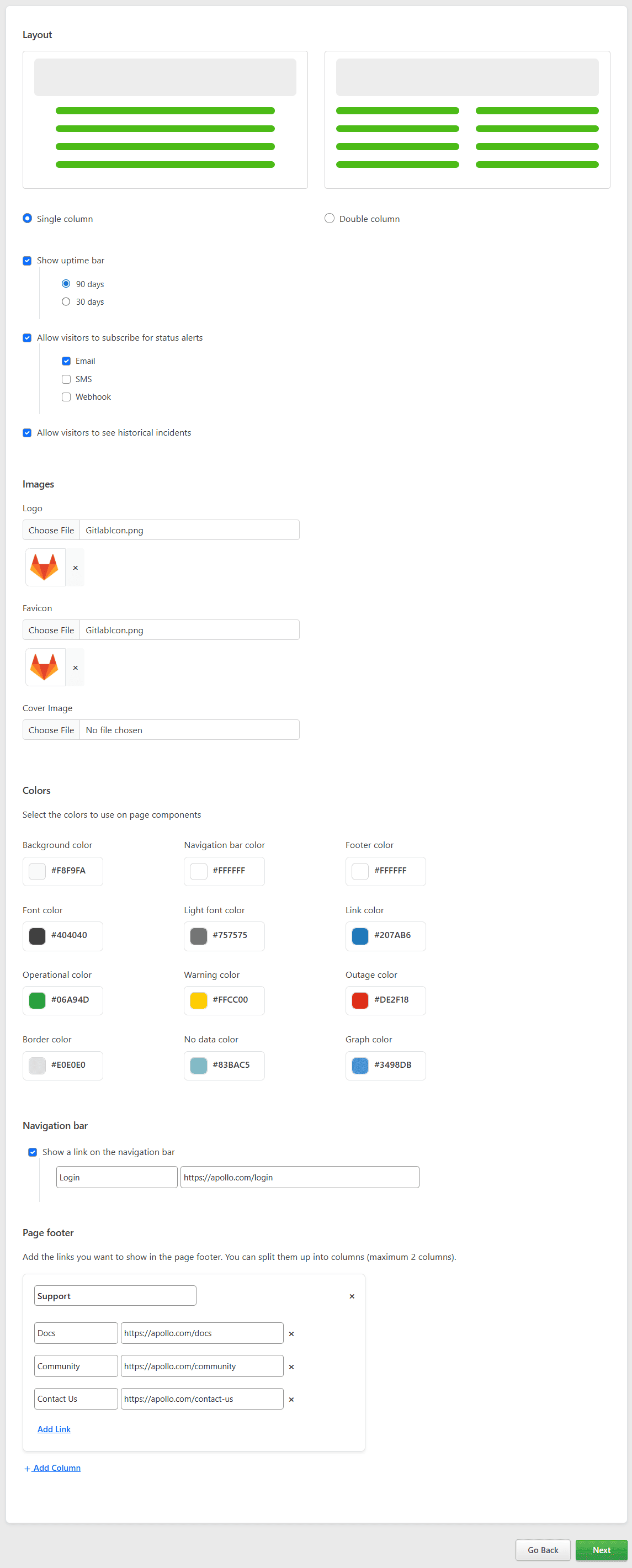
AlertOps does not include a native status page. For teams that need external stakeholder communication during incidents - keeping customers, partners, and executives informed of service status in real time - this means adding and managing a separate tool alongside the incident-orchestration platform. TaskCall includes internal and external status pages as part of the Digital Operations plan. Teams can publish branded status pages, sync incident state automatically so status updates reflect active incidents without manual intervention, schedule maintenance windows, manage subscriber notifications, and give customer support teams a dedicated status dashboard - all from inside the same operational workflow used for incident response. No additional tooling required.
The pricing picture compounds the capability difference. AlertOps' public positioning does not include status pages at any tier, which means teams that need them must evaluate and purchase a separate solution. TaskCall's Digital Operations plan includes status pages alongside AIOps, intelligent noise reduction, automated diagnosis, workflow automation, AI-generated postmortems, customer support visibility, and analytics - at one price, with no capability gates. A team that starts with on-call management and incident response eventually needs noise reduction to address alert fatigue, AI-assisted triage to speed diagnosis, status pages to manage stakeholder communication, and customer-support visibility to connect the engineering response to the business impact. In TaskCall, all of those capabilities are live from the moment the Digital Operations plan is activated.
A side-by-side look at what each platform offers across core incident management capabilities.
| TaskCall | AlertOps | |
|---|---|---|
| 15% Better Pricing on Every Plan TaskCall costs 15% less than AlertOps across all comparable subscription tiers - with AIOps, dynamic workflow automation, automated resolution execution, AI postmortems, status pages, and customer support visibility included at every level, not locked behind tier upgrades. | ||
| AIOps AI-powered alert grouping, likely cause analysis, resolution recommendations, and intelligent noise reduction. | ||
| Status Page Built-in internal and external status pages for real-time stakeholder and customer communication during incidents. | ||
| Runbook Automated runbook execution for diagnostic and remediation steps during active incidents. | ||
| Live Call Routing Direct voice escalation to on-call responders for immediate incident response. | ||
| On-Call Schedules Flexible on-call scheduling with escalation policies, follow-the-sun support, and mobile management. | ||
| Dynamic Drag and Drop Workflow Visual drag-and-drop workflow canvas for building and modifying incident response logic without code changes. | ||
| Automated Validation and Resolution Execution Automatic execution of validation checks and resolution steps during incident response without requiring human intervention. | ||
| Nested IVR Multi-level interactive voice response for intelligent call routing to on-call engineers. | ||
| Dependency Graph Visual graph of service dependencies for understanding blast radius and cascading impact during incidents. |
Get the complete digital operations platform.
AIOps, intelligent noise reduction, automated diagnosis, status pages, AI postmortems, and customer support visibility - all in one plan.
No tier upgrades. No surprises. Switch to TaskCall today.
Don't lose money from downtime.
We are here to help.
Start today. No credit cards needed.
81% of teams report response delays due to manual investigation.
Morning Consult | IBM
Global Security Operations Center Study Results
-- March 2023