Opsgenie is being shut down by Atlassian. TaskCall is the modern, actively developed alternative that gives your team AI-powered incident management, intelligent noise reduction, automated postmortems, and live call routing - without the platform uncertainty or the dead-end roadmap that comes with a product heading toward end of life.
Atlassian announced the end-of-life of Opsgenie, leaving thousands of engineering teams in a difficult position: find a reliable Opsgenie alternative on a fixed timeline, or risk losing access to their critical on-call infrastructure at the worst possible moment. For teams that have built escalation policies, on-call schedules, heartbeat monitors, and integration mappings over years of operation, this is not a minor inconvenience. It is a material disruption that demands a migration partner capable of matching every existing capability while delivering the AI-driven features that Opsgenie never offered in the first place.
TaskCall is that partner. Built as a purpose-driven incident management platform, TaskCall covers every critical capability Opsgenie teams depend on - alert lifecycle tracking, heartbeat monitoring, ChatOps integration, postmortems, and status pages - and extends far beyond with AI incident cause and resolution analysis, AI-assisted postmortem generation, and intelligent noise reduction. These are not roadmap items. They are live, production-ready features available on TaskCall's Digital Operations plan. Teams migrating from Opsgenie gain a materially stronger platform, not just a like-for-like replacement.
The migration itself is designed to be fast. TaskCall provides structured import tooling for on-call schedules, escalation policies, team structures, and integration endpoints. Most teams complete the full transition in a single working session, with no data loss and no gaps in on-call coverage during the cutover. Dedicated migration support is included at no extra charge - there is no professional services engagement required, no lengthy onboarding contract, and no minimum commitment period. Teams that need to move quickly due to Opsgenie's shutdown timeline can do exactly that.
Perhaps the sharpest difference between TaskCall and Opsgenie is the trajectory of each product. Opsgenie is in an end-of-life wind-down. No new features are shipping. No architectural investments are being made. Engineering teams that stay on Opsgenie are accepting a platform that will grow progressively more outdated until it is turned off entirely. TaskCall, by contrast, is in active development: new capabilities, integrations, and AI enhancements ship continuously based on direct feedback from the engineering teams that rely on the platform every day. Choosing TaskCall is choosing a platform with a long-term future in the rapidly evolving landscape of AI-powered incident management.
TaskCall applies AI analysis to every active incident, automatically identifying probable root causes based on alert patterns, historical incident data, and integration telemetry. Engineers receive a prioritized list of likely causes and recommended resolution steps at incident creation - sharply reducing the time spent on manual diagnosis during high-pressure outages. Opsgenie offered no equivalent capability at any tier.
TaskCall generates structured postmortem drafts automatically when incidents are resolved, pulling in timeline data, alert history, acknowledgement records, and resolution notes to produce a complete incident narrative with minimal manual effort. Teams can review, annotate, and download AI-generated postmortems in a fraction of the time required for fully manual write-ups. Opsgenie had no AI postmortem capability in its feature set.
TaskCall's intelligent noise reduction engine automatically correlates related alerts into unified incidents, suppresses known flapping signals, and filters low-severity noise before it ever reaches an on-call engineer's notification queue. The result is a much cleaner alert stream that reduces on-call burnout and ensures engineers wake up to one actionable incident rather than dozens of redundant notifications. Opsgenie offered no intelligent noise reduction capability.
TaskCall ships new features, integrations, and AI enhancements on a continuous release cadence driven by direct customer feedback. Opsgenie is in a documented end-of-life phase with no new investment. Engineering teams that choose TaskCall are investing in a platform that will be meaningfully more capable twelve months from now than it is today - not one that is counting down to shutdown.
TaskCall includes fully native public and private status pages in every subscription, tightly integrated with incident state so pages update automatically as incidents are acknowledged and resolved. Opsgenie's status page offering exists only through the broader Atlassian ecosystem, introducing external dependency, additional configuration complexity, and the same platform uncertainty that surrounds Opsgenie itself.
Both TaskCall and Opsgenie support ChatOps integrations, heartbeat monitoring, alert lifecycle tracking, and structured postmortems. TaskCall delivers all of these capabilities alongside its AI layer, ensuring that teams migrating from Opsgenie retain every workflow they have built while gaining the AI-powered capabilities that modern incident management demands.
When a P1 incident fires at 2 AM, the most expensive minutes in the entire incident lifecycle are the ones spent diagnosing root cause. An on-call engineer woken from sleep, navigating dashboards and log streams across multiple tools, manually correlating signals from a dozen different monitoring integrations - this is where mean time to resolution explodes, SLA windows close, and on-call burnout compounds over time. Opsgenie, throughout its entire product lifecycle, never addressed this problem with AI-driven analysis. Alert routing was its core competency, and it stopped there.
TaskCall's AI incident cause and resolution engine changes the calculus of the first five minutes of every incident. The moment a new incident is created, TaskCall analyzes the triggering alert, cross-references it against historical incident patterns, examines correlated signals from connected integrations, and surfaces a ranked list of probable root causes alongside recommended resolution steps. Engineers do not start from zero. They start with a hypothesis - one generated from the same data they would eventually reach manually, delivered instantly. For engineering teams managing complex distributed systems with dozens of interdependent services, this AI-powered diagnostic layer can mean the difference between a five-minute fix and a forty-minute war room.
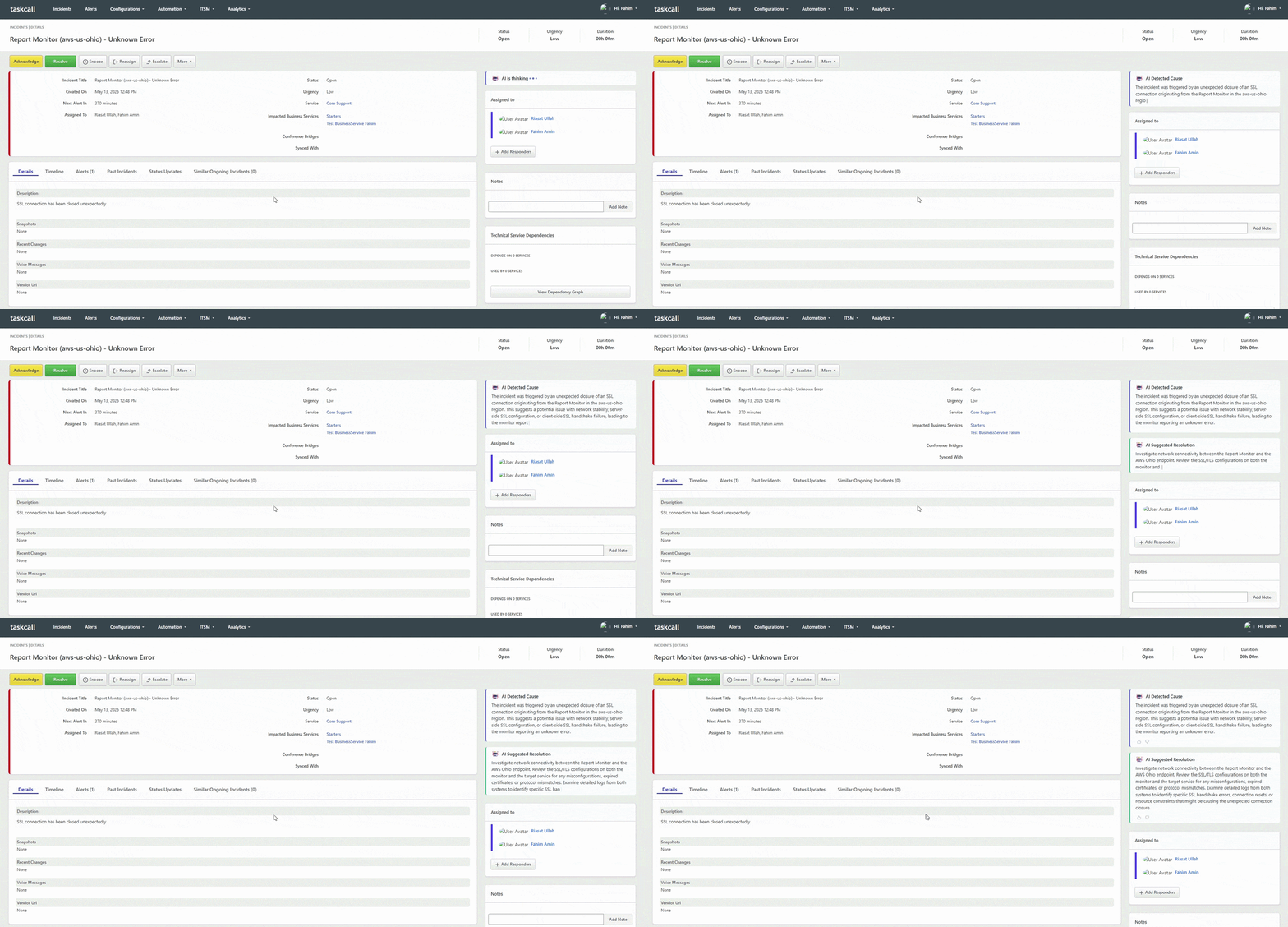
Postmortems are essential to the reliability engineering practice, but they are consistently one of the most time-consuming artifacts that engineering teams produce. A complete, high-quality postmortem requires reconstructing a precise incident timeline, documenting every response action taken, analyzing contributing causes, and producing actionable follow-up items - all while the team is still recovering from the incident itself. In practice, postmortems get delayed, abbreviated, or skipped entirely because the manual effort required is simply too high given the other demands on an engineering team's time.
TaskCall's AI postmortem generation eliminates the blank-page problem. When an incident is resolved, TaskCall automatically compiles the complete incident timeline - including alert trigger times, acknowledgement records, escalation events, responder actions, and resolution notes - and generates a structured postmortem draft that meets standard blameless postmortem format requirements. Teams review, annotate, and refine the AI-generated draft rather than building it from scratch. The result is a higher rate of postmortem completion, more consistent documentation quality, and faster time-to-publish for the reports that drive long-term reliability improvements. Opsgenie offered basic postmortem support but no AI generation capability, leaving the most labor-intensive part of the process entirely manual.
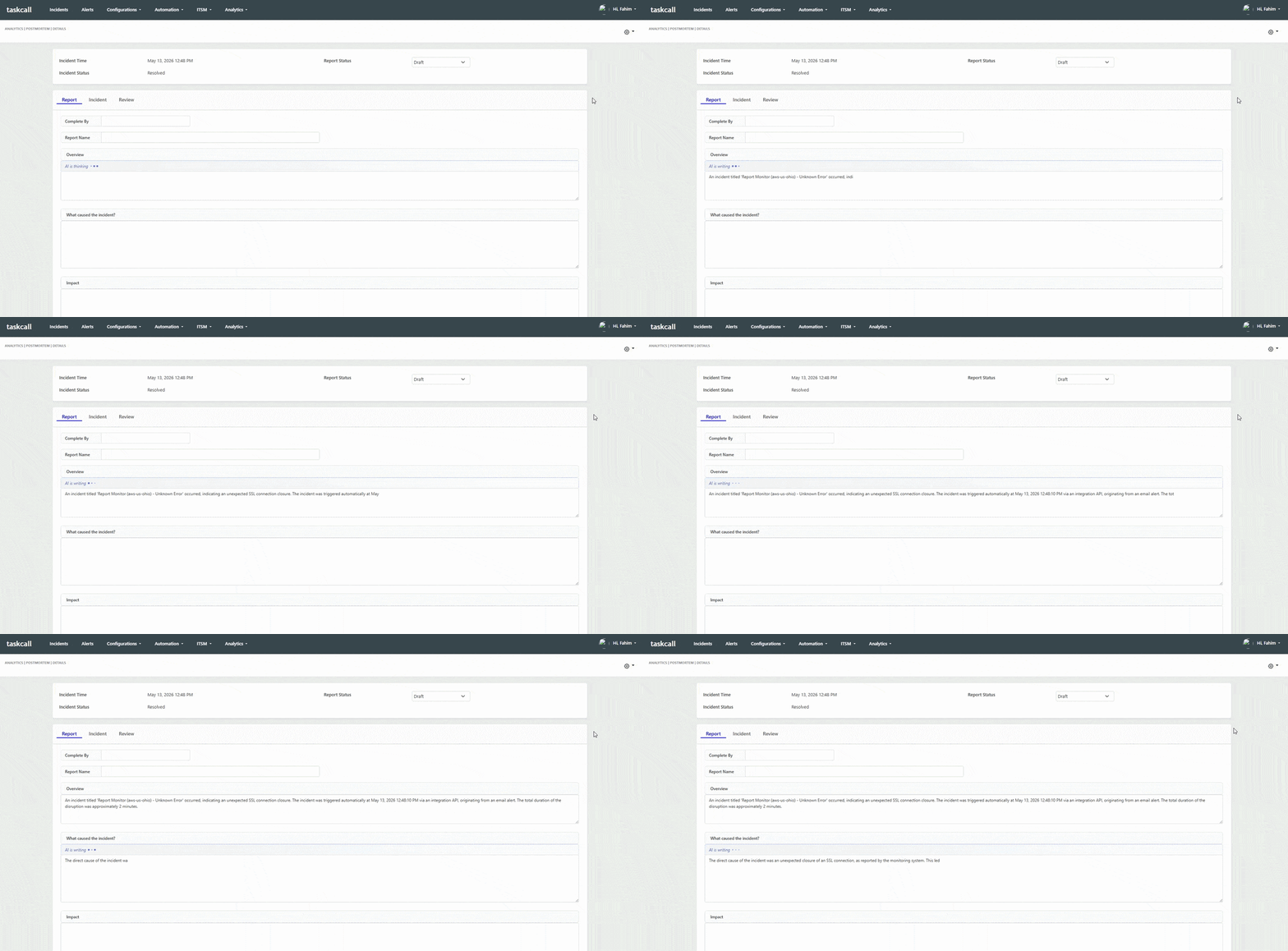
Alert fatigue is one of the defining challenges of modern on-call operations. A single degraded microservice can trigger hundreds of downstream alerts within minutes. A misconfigured threshold can generate thousands of notifications per day for a condition that resolves itself without human intervention. Over time, the accumulated cognitive load of high-volume, low-signal alerting erodes the reliability of the entire on-call function: engineers stop responding to notifications with urgency, critical incidents get missed in the noise, and on-call rotations become a source of chronic burnout rather than a resilient operational safeguard. Opsgenie had no intelligent noise reduction capability to address this problem - alert correlation and suppression were entirely absent from its feature set.
TaskCall's intelligent noise reduction engine operates continuously across all incoming alert traffic. It uses signal fingerprinting to group related alerts from the same underlying cause into a single unified incident, suppresses recurring signals that match known flapping patterns, and deprioritizes low-severity notifications based on historical resolution patterns for similar alerts. The result is a much cleaner alert queue: engineers receive one actionable notification per real incident rather than dozens of redundant pages. Intelligent noise reduction is available on TaskCall's Digital Operations plan, ensuring that engineering teams get a calmer, more focused on-call experience backed by machine learning - without needing an enterprise contract to access it.
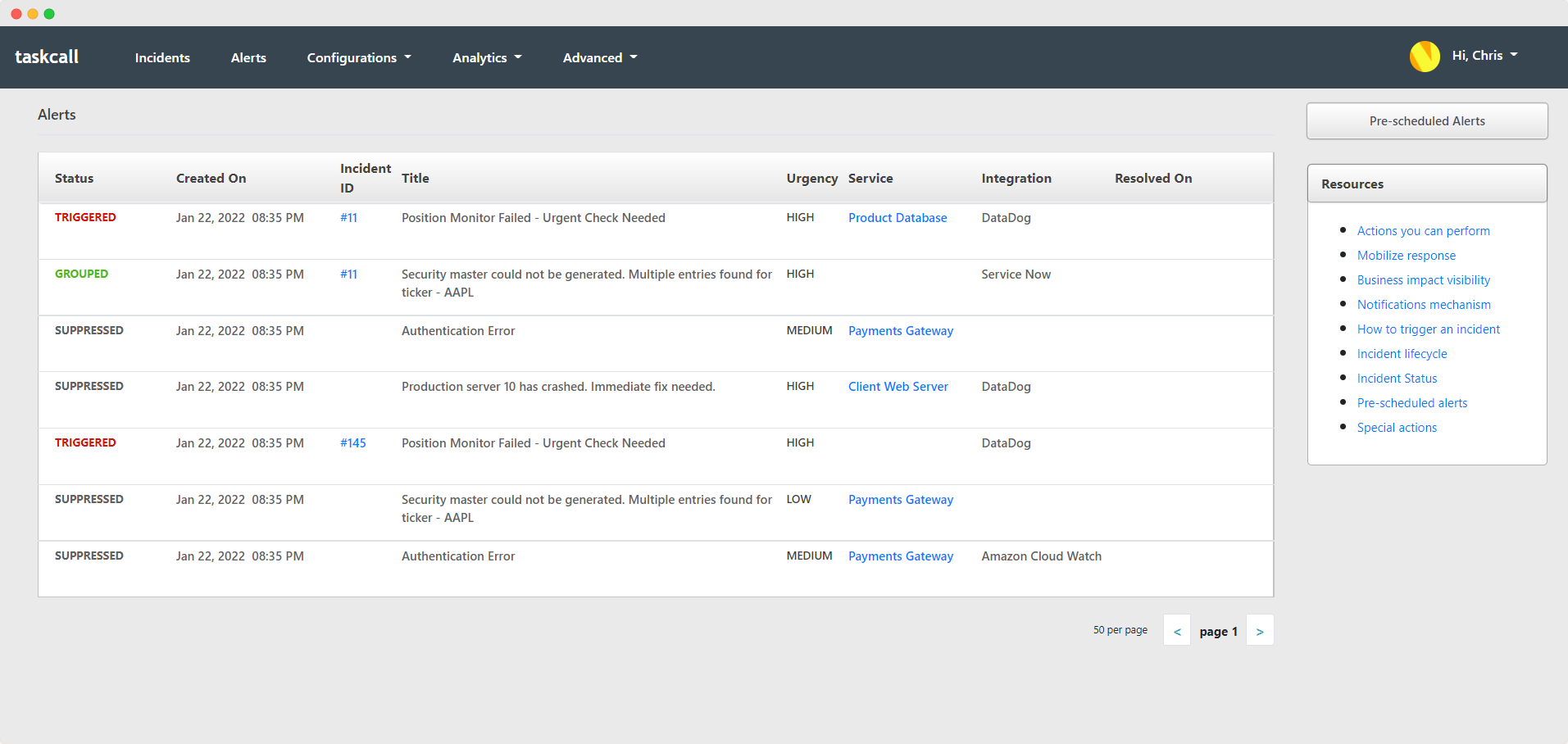
A side-by-side look at what each platform offers across core incident management capabilities.
| TaskCall | Opsgenie | |
|---|---|---|
| AI Incident Cause & Resolution AI-powered root cause analysis and resolution recommendations for active incidents. | ||
| AI Postmortem Automated postmortem draft generation from incident timeline and response data. | ||
| ChatOps Incident notifications and management actions via Slack, Microsoft Teams, and other chat platforms. | ||
| Alert Lifecycle Tracking Full visibility into alert state from trigger through acknowledgement to resolution. | ||
| Heartbeats Proactive monitoring that fires an alert when an expected check-in signal is not received. | ||
| Postmortem Structured postmortem documentation linked to incident records. | ||
| Status Pages Public and private status pages for real-time stakeholder communication during incidents. | ||
| Intelligent Noise Reduction Machine learning-powered alert correlation, deduplication, and flapping signal suppression that improves over time. | ||
| Active Development Ongoing product investment, new feature releases, and a growing roadmap. |
Opsgenie is going away. TaskCall is here.
Migrate your schedules, escalations, and integrations in hours. Gain AI incident analysis, intelligent noise reduction, AI postmortems, and native status pages that Opsgenie never offered.
Full migration support included at no extra charge.
Don't lose money from downtime.
We are here to help.
Start today. No credit cards needed.
81% of teams report response delays due to manual investigation.
Morning Consult | IBM
Global Security Operations Center Study Results
-- March 2023